Season 1 : Findings & Solutions

What behavioral health care looks like when it works

We analyzed 40 interviews with clinicians, advocates, and the people closest to this work and we found that one pattern held. The problems are real and well documented. So are the solutions. This is what our guests have built.
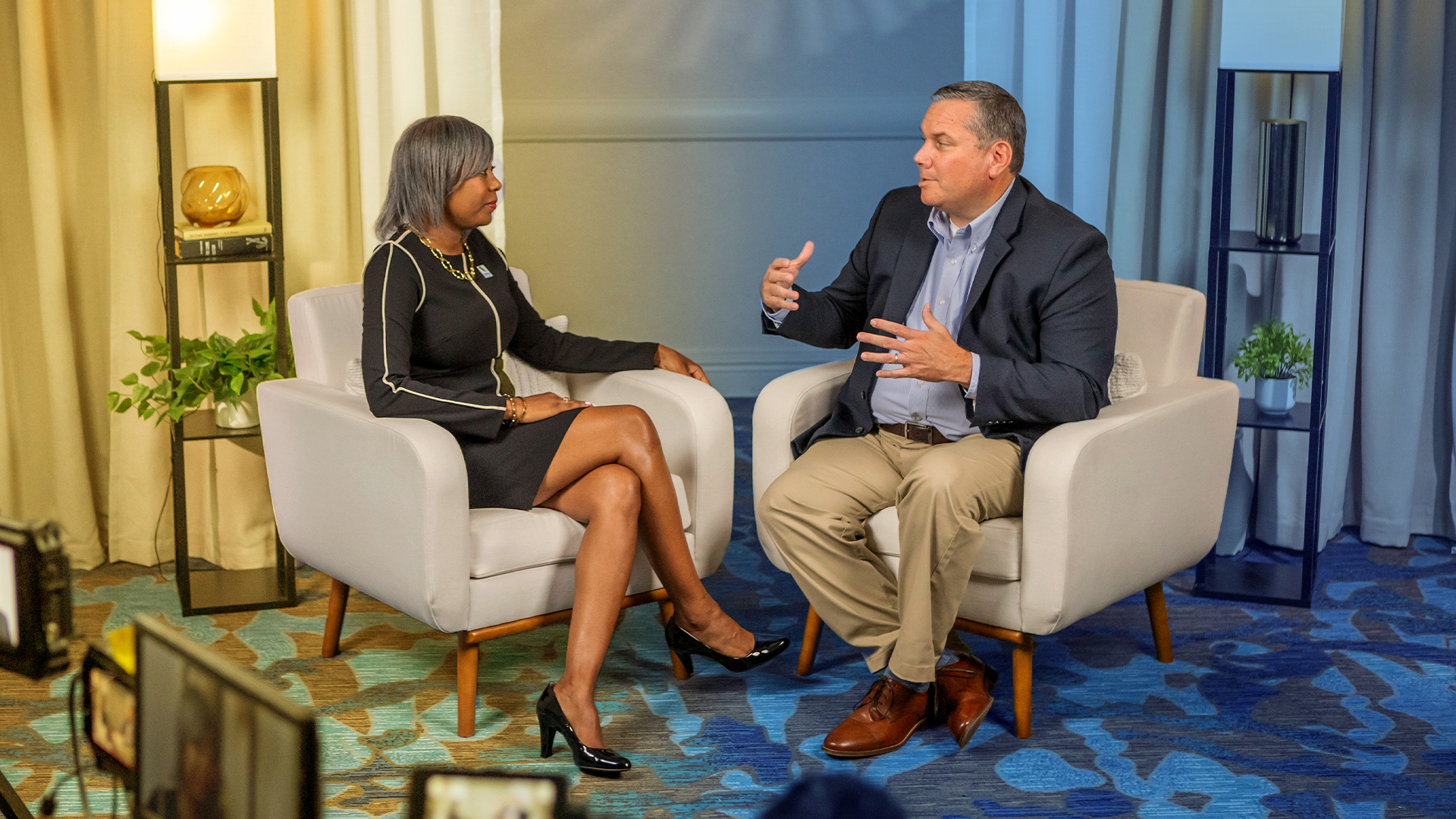
Video Player with Thumbnail

Closing the Gap

Behavioral health need lands where it was never planned for. It shows up in a primary care visit booked for something else, in an emergency room at two in the morning, in a parent's unreturned voicemail. There it meets a system assembled in pieces, and the person is left to navigate the seams alone, usually at their worst moment. That gap runs through the whole season. What our guests add is the other half of the story: the models, the workarounds, and the proof that a better way already exists. We organized what we learned into three questions our audience asked us to explore. Each names a problem worth facing, and a set of solutions worth carrying forward.

System Fragmentation

From a maze of disconnected services toward a door that opens.
Care splinters across county lines, data silos, and untrained frontlines. Our guests show how to build the single, human front door the system has been missing.
Position Aware Button

Basic Needs as Clinical Determinants

From a treatment plan on paper toward the conditions that let it work.
The soundest clinical plan comes undone when a person has nowhere to sleep or nothing to eat. Our guests treat housing, food, and stability as what they are: deciding factors in behavioral health.
Position Aware Button

The Cost of Inaction

From a bill paid in crises toward care that costs less by coming sooner.
Untreated behavioral health carries a cost that only moves, to emergency rooms, jails, and the street, arriving larger every time. Our guests make the economic case, and back it with numbers.
Position Aware Button

The Season's Thread

Three Challenges
Fragmentation, basic needs, and cost may seem like separate issues, but they're all connected.
One Direction
Reach people early, meet them where they are, and build stronger connections across care.
What Comes Next
The models exist. The evidence is here. Now it's about scaling what works and continuing to learn.
TNT Open Mind Insights is produced by UC Irvine's Train New Trainers Primary Care Psychiatry Fellowship and Ethical Narrative Storytelling Agency. New seasons and topics added over time.
System Fragmentation

A system that splinters the people it is meant to hold

Video Player with Thumbnail

The Problem

It starts in the wrong place
Behavioral health rarely arrives in the right office. It surfaces in a primary care visit booked for back pain, in an ER after midnight, in a message a family leaves that no one returns.
The system is fragmented
At every one of those doors, the person meets a system built in pieces: county by county, program by program, specialty by specialty, none of them quite speaking to the others.
The burden shifts to the patient
A whole life gets carried into a system that only sees one slice at a time, leaving the person to stitch it all together—often on their hardest day. For many, that fragmentation becomes the barrier itself.

Solutions by Guest

Dr. Le Ondra Clark Harvey
California Behavioral Health Association
Dr. Le Ondra Clark Harvey
CEO of California Behavioral Health Association
Gives the fracture its clearest name. She describes a county-based system organized around programs rather than people, where whole-system thinking and whole-person care have quietly come apart. Her contribution is diagnostic precision: she frames the problem sharply enough that a solution has something to aim at.
Position Aware Button
Carmen Katsarov
CalOptima
Carmen Katsarov
Executive Director Behavioral Health Integration of CalOptima
Shows where the fracture lives inside a health plan. Data stays walled off even when several agencies are serving the very same person. Her value is making invisible plumbing visible, because care cannot be connected while the information stays apart.
Position Aware Button
Dr. Veronica Kelley
 OC Health Care Agency
Dr. Veronica Kelley
Director of OC Health Care Agency
Describes county services that stayed siloed, and points toward the fix. Deliberate coordination across agencies, including with law enforcement, so a person in crisis stops falling into the space between systems.
Position Aware Button
Steve Pitman
NAMI OC
Steve Pitman
President of NAMI OC
Past president of NAMI nationally and a leader at NAMI Orange County, speaks for the families left outside the door. Parents call with information no clinician else holds, and in his experience, "they will not return my calls." He notes that "60% of the counties in the United States do not have a single psychiatrist," and offers a fix that costs nothing: treat the family as an extension of the care team rather than an interruption to it.
Position Aware Button
Dr. Elizabeth Salisbury-Afshar
University of Wisconsin
Dr. Elizabeth Salisbury-Afshar
Professor at the University of Wisconsin–Madison
A family physician working across national policy and a low-barrier clinic in Madison, built the door the system was missing. People were leaving hospitals, ERs, and jails on the right medication with nowhere to follow up, so she created a walk-in clinic whose promise is disarming in its simplicity: “If you are a person who uses substances, you are welcome here always. Come on in and we’ll figure out what we can do.” She shows proof of concept, that a fragmented system can be given one human front door.
Position Aware Button
Dr. Robert McCarron
TNT Primary Care Fellowships
Dr. Robert McCarron
Founder of the TNT Primary Care Psychiatry Fellowships at UC Irvine
Solved the workforce math instead of waiting on it: "We don't have enough psychiatrists. And the answer is those in the primary care setting." His diagnosis of the gap is just as plain: "They didn't get the training. They don't know how to do it." TNT Fellowships equip the clinicians patients already see to recognize, treat, and know when to refer. It is a scalable fix.
Position Aware Button
Dr. Sharmil Shah
California Department of Health Care Access and Information
Dr. Sharmil Shah
Branch Chief - Behavioral Health and Policy, HCAI
Dr. Shah works the problem upstream. She is rebuilding the behavioral health workforce and moving a system she calls “very reactive versus preventative” toward catching people early. Her value is scale, the state-level lever that turns one good local model into a statewide one.
Position Aware Button
Luke Tharasri
Mindful Living Centers
Luke Tharasri
CEO of Mindful Living Centers
A self-described recovering hospital CEO, redesigns the delivery model itself. He works to convert empty hospital beds into psychiatric units and imagines community centers as common as a coffee shop "in every corner of America." He names the incentive that keeps people sick, "the perverse incentive of wishing people sick," and organizes his work around three words that answer fragmentation directly: "no wrong door."
Position Aware Button
The Takeaway
Listen across these eight and one thread emerges: build care around the person, not the program.
Clark Harvey, Katsarov, and Kelley show exactly where the person gets dropped, between counties, between data systems, between agencies. Pitman shows who waits at the door, unanswered.
The builders show the way back, through Salisbury-Afshar welcome, McCarron's trained frontline, Shah's workforce pipeline, and Tharasri's open door.
The fix arrives as a hundred smaller acts of connection:
a returned phone call, a warm handoff, a clinician who knows what to do, until the seams stop being where people fall through.
From a maze of disconnected services toward a door that opens.
BASIC NEEDS AS CLINICAL DETERMINANTS

You cannot medicate your way out of a housing crisis

Video Player with Thumbnail

The Problem

Every clinician knows the moment. The plan is sound. The medication is right. And none of it holds, because the person has nowhere to sleep, nothing to eat, or no one to call. We train to treat the body and the mind, then send people back to the conditions that undo the work before they reach the parking lot.

Housing, food, and human connection frequently decide behavioral health outcomes, and our guests have spent careers proving it. Overlook those needs, and even the best clinical work gets written on water.
Solutions by Guest

Dr. Pooja Bhalla
Illumination Foundation
Dr. Pooja Bhalla
CEO of Illumination Foundation
Formerly twenty-five years with Boston Health Care for the Homeless, treats housing as the intervention rather than the reward. She is direct about the driver, that people become unhoused because "they simply can't afford to rent," and just as clear about the clinical stakes. Until untreated anxiety and depression are addressed, "it's going to be very, very hard to address their hypertension and their asthma and their chronic diseases." Her street-to-home pilot has already moved 128 high-utilizers into permanent housing. Her value is the proof that housing is health care.
Position Aware Button
Jennifer Friend
Project Hope Alliance
Jennifer Friend
CEO of Project Hope Alliance
Works with children and youth experiencing homelessness, and she puts the stakes in language every provider feels. A strong treatment plan means little without an execution plan to carry it out. For a student moving between shelters and cars, that plan collapses without stable housing behind it, so her organization wraps housing and education around the clinical work and gives it somewhere to actually happen. Her value is the reframe: stability first, or the rest will not hold.
Position Aware Button
Dr. Patricia Ronald Riba
Serving Kids Hope
Dr. Patricia Ronald Riba
Pediatrician and Founder of Serving Kids Hope
Pediatrician and TNT graduate, found that the childhood obesity filling her clinic "had nothing to do with portion control." As she describes it, "it really had to do with the social disparities of health," with families who were food insecure. Her response never involved a diet. It involved the whole family and its access to food, and it produced a 91% success rate. When you treat the determinant, the diagnosis follows.
Position Aware Button
Dr. Steve Delisi
YourPath
Dr. Steve Delisi
Chief Medical Officer of YourPath
Carries the same logic into the street. He meets people in encampments with housing, food, and clothing alongside the treatment, because recovery cannot begin with someone who has no safe place to stand. His value is sequencing: needs and treatment together, from the first contact.
Position Aware Button
Zane Grant, NP
Gracelight Community Health
Zane Grant, NP
Family Nurse Practioner at Gracelight Community Health
A nurse practitioner at a federally qualified health center, integrates behavioral and medical care in the safety-net setting where basic-need instability is the norm. Grant's value is the frontline model: one visit, one relationship, the whole person.
Position Aware Button
Anthony Guzman
Native American Health Center
Anthony Guzman
Former Chief Cultural Officer at Native American Health Center
Anchors the topic in lived experience, naming what sits beneath all of it. Food, and human connection, as clinical facts rather than soft extras. That testimony is the reminder the data cannot give, that these determinants are, first, people.
Position Aware Button
The Takeaway
The thread here is simple to say and hard to practice: treat the conditions that let treatment work.
Dr. Bhalla and Dr. Delisi begin with a roof and a meal. Jennifer Friend builds the execution plan the treatment plan assumes.
Dr. Patricia treats the disparity and watches the diagnosis resolve. NP Grant does it all in one room. And Guzman keeps us honest about who we are talking about.
Together they retire the old choice between social services and health care. In these interviews, the two arrive as one.
From a treatment plan on paper toward the conditions that let it work.

The Problem

Untreated behavioral health always carries a cost. The bill simply moves to emergency departments, to jails, to inpatient units, to the sidewalk, and it grows larger every time it is deferred.

We tell ourselves that prevention and wraparound care are the costly choices, while the truly costly one is the default we reach for: waiting until crisis, then paying for the most acute and least effective care there is. That cost is already on the books. We are paying it in the wrong column.
Solutions by Guest

Dr. Heinrich
Medical College of Wisconsin
Dr. Heinrich
Professor of Psychiatry
and Family Medicine
Dual-boarded in family medicine and psychiatry, makes the least political version of the case. The collaborative-care model is cost-effective, cutting emergency visits and hospitalizations by treating behavioral health where patients already are. Heinrich's value is clean clinical evidence, the argument that asks no one to feel generous.
Position Aware Button
Mary Ellen Stuart and Mindy Andrews
John Henry Foundation
Mary Ellen Stuart and Mindy Andrews
Executive Director & Chairperson
of the John Henry Foundation, run a 36-year residential program for people with schizophrenia, and they do the arithmetic out loud. Their residents are "not in psych units at $1,400 a day," and they are not living on the street. Replicating the model, they argue, would be "cheaper than incarceration and cheaper than psych units." Yet the board-and-care reimbursement rate of roughly $1,250 a month, in Andrew's words, "doesn't pencil" against California rents.
Position Aware Button
Gulshan Yusufzai
Muslim American Society Social Services Foundation
Gulshan Yusufzai
Executive director of Muslim American Society Social Services Foundation
executive director of Muslim American Society Social Services Foundation and once a refugee herself, supplies the headline figure. The 35 agencies in California's Reducing Disparities Project are "saving California $335 million." She also names the cost that never reaches a spreadsheet, "a community that continues to be in pain."
Position Aware Button
Karen Larsen
The Steinberg Institute
Karen Larsen
CEO of the Steinberg Institute
CEO of the Steinberg Institute, points to Full Service Partnerships that save the state millions by reaching people long before their twentieth hospitalization. Larsen's shows the policy proof, a funded model that already demonstrates the savings.
Position Aware Button
Dr. Gail Reilly
TNT Fellowships
Dr. Gail Reilly
Family Physician and TNT Fellowships Addiction Medicine Alumni
a family physician in addiction medicine and a TNT fellow, names the fix hiding inside the problem. Peer and team-based care that works, and yet "is not reimbursed." Move addiction treatment into primary care, she argues, "right there along with diabetes and hypertension management and asthma management," and pay for the team that makes it work.
Position Aware Button
Randall Hagar
Psychiatric Physicians Alliance of California
Randall Hagar
Legislative Advocate & Policy Consultant
makes the cost impossible to abstract. Families driven toward bankruptcy by inpatient caps, and a parity fight still unfinished.
Position Aware Button
Dr. Justine Welsh
Emory School of Medicine
Dr. Justine Welsh
A triple-boarded child/adolescent and adult addiction psychiatrist and an Associate Professor in the Department of Psychiatry and Behavioral Sciences at Emory University School of Medicine.
, of Emory, calls for treating addiction "on par with all other medical conditions," and names the stakes of the status quo. Nearly 480,000 Americans lost every year to smoking alone. Her value is parity as both principle and prescription: stop building addiction care in a silo, and stop pretending it is cheaper to look away.
Position Aware Button
The Takeaway
The common thread in this is a single sentence a legislator could carry into a budget hearing. Treating behavioral health early is the cheaper choice, once we stop paying for the expensive one
Dr. Heinrich proves it clinically. Mary and Mindy prove it in one facility. Larsen proves it in one program. Yusufzai proves it at $335 million.
Dr. Reilly and Welsh show us the lock, reimbursement and parity, and hand us the key. And Hagar makes sure we never mistake this for an accounting exercise.
Invest at the front end, and the return is measured in more than dollars. It looks like a family that stays whole.
From a bill paid in crises toward care that costs less by coming sooner.
Frequently Asked Questions
What is TNT Open Mind Insights?
Invest at the front end, and the return is measured in more than dollars. It looks like a family that stays whole.
How does this series support mental health professionals?
Invest at the front end, and the return is measured in more than dollars. It looks like a family that stays whole.
Can I suggest topics or guests?
Invest at the front end, and the return is measured in more than dollars. It looks like a family that stays whole.
How can I stay connected with TNT Open Mind Insights?
Invest at the front end, and the return is measured in more than dollars. It looks like a family that stays whole.